What is greenwashing and how can my business avoid it?


From “eco‑friendly” to “carbon neutral”, it can feel like every product or service now comes with a green label. But not all of those claims are accurate or fair. When a business exaggerates or misleads people about how environmentally friendly it is, that’s called greenwashing.
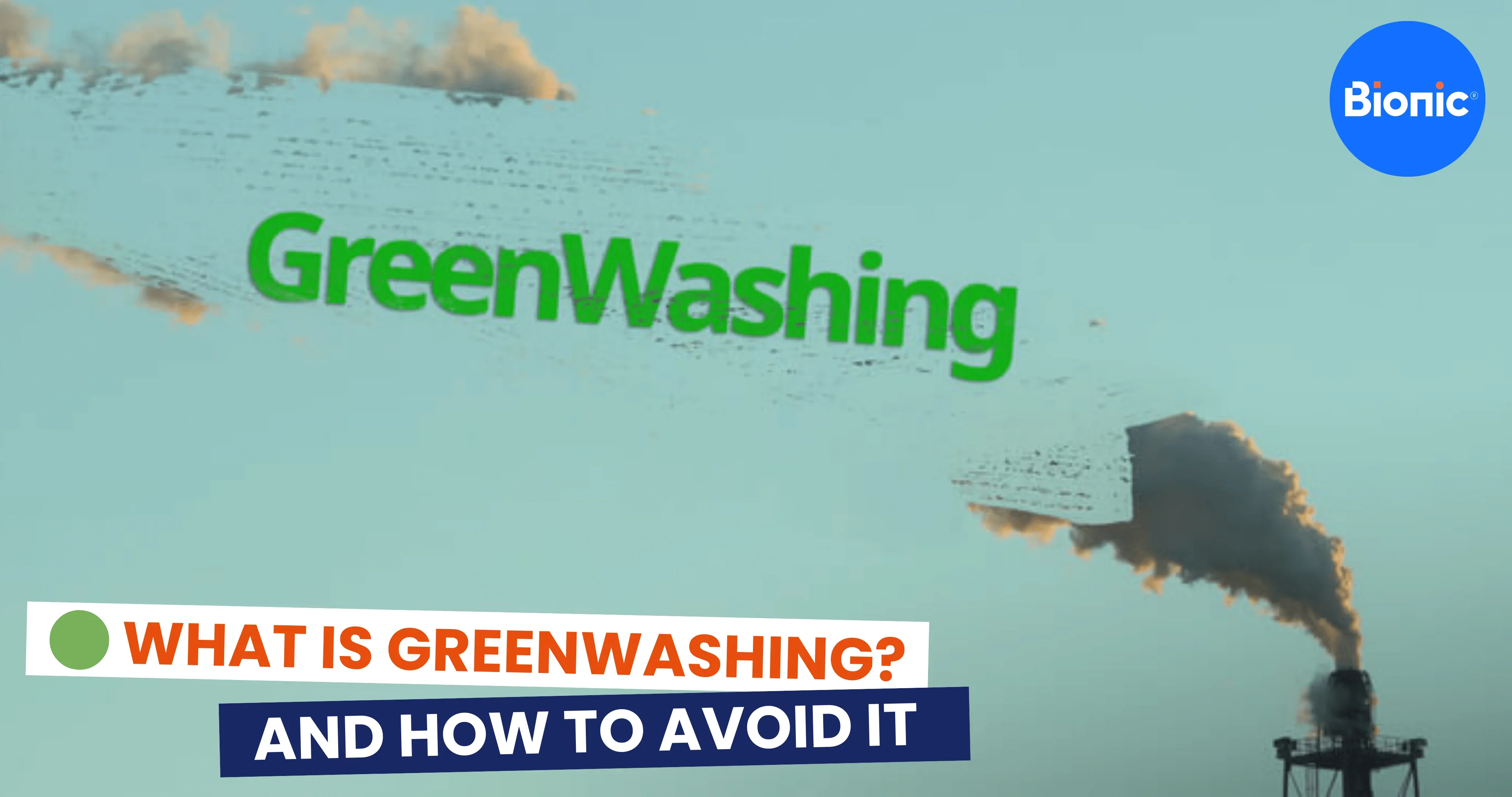
Corporate greenwashing is on the rise as businesses fake an interest in being eco-friendly. But what exactly is greenwashing?
In this guide, we’ll explain what greenwashing looks like in practice, why regulators are cracking down on it, how it can hurt both consumers and honest businesses, and what you can do as a UK business owner to spot and avoid it.
Five‑point summary on greenwashing
- Greenwashing happens when a business makes false, exaggerated or unclear environmental claims about its products, services or brand.
- UK regulators, including the CMA, ASA and FCA, are now treating greenwashing as a serious issue, with new rules and potential fines of up to 10% of global turnover for misleading claims.
- Research shows that over half of UK consumers would stop buying from a company found to have greenwashed, and many are already changing their minds because of misleading claims.
- Greenwashing can harm genuine sustainability efforts, undermine trust and create an unfair playing field for SMEs that are investing in real environmental improvements.
- Small businesses can avoid greenwashing by being specific and truthful, backing up claims with evidence, using recognised standards or certifications, and keeping communications clear and up to date.
What is greenwashing?
Greenwashing is when a company makes environmental claims that are false, exaggerated, misleading or so vague that customers could easily get the wrong idea. It can be done through adverts, packaging, websites, social media posts or even company reports.
Examples include products marketed as “100% eco‑friendly” with no evidence, “carbon neutral” claims that rely entirely on low‑quality offsets, or brands that highlight one small green initiative while ignoring much bigger negative impacts. One famous example of greenwashing was when Volkswagen fitted tech to its test vehicles to help record false emissions test results.
In short, greenwashing is less about being imperfect on sustainability (which every business is) and more about how you talk about your environmental impact.
The term was first coined in 1986 by environmentalist Jay Westerveld, who said that ‘greenwashing’ refers to the process of conveying a false, misleading or untrue action about the positive impact a company, product or service has on the environment.
‘Greenwashing’ can also occur when a company attempts to emphasise a sustainable aspect of a product or service, in an attempt to overshadow their involvement in environmentally damaging activities.
How does greenwashing work?
Terms like ‘sustainable’, ‘green’ and ‘eco-friendly’ — or just claiming to be ‘good for the planet’ or ‘better for the environment’ – make companies appear greener than they are. However, these nonspecific buzzwords are thrown around without any supporting evidence, sometimes making it difficult to understand a company's true practices.
Due to the increasing number of greenwashing cases that we’ve seen in the media, consumer scepticism has increased.
What are some examples of greenwashing?
Greenwashing can take many forms, but some patterns come up again and again. Examples include:
- Vague buzzwords – Using terms like “eco‑friendly”, “green” or “sustainable” without explaining what they mean or providing evidence.
- Hidden trade‑offs – Promoting one “green” feature while hiding bigger environmental downsides, such as “biodegradable” packaging for a highly polluting product.
- No proof – Making claims about reduced emissions, recycled content or ethical sourcing without any data, certificates or third‑party verification.
- Irrelevant claims – Advertising something as “CFC‑free” when CFCs are already banned, or “vegan” for a product that has never contained animal products.
- Green visuals without substance – Using lots of green colours, leaves or nature images in marketing while offering little or no real environmental improvement.
In the UK, regulators have also highlighted misleading “carbon neutral” or “net zero” wording based entirely on offsets, and bank or insurer advertising that over‑emphasises sustainable activities while downplaying financing of high‑carbon sectors.
What are some real examples of greenwashing by businesses?
Greenwashing can be as subtle as misleading packaging wording choices to companies describing themselves as eco-champions, despite this not actually being the case. Greenwashing is a harmful way of advertising, and companies should be held accountable.
But have any companies ever been caught greenwashing?
1. Nestlé
Back in 2018, Nestlé released a statement saying that it had big ‘ambitions’ for its packaging to be either 100% recyclable or reusable by 2025.
However, critics and environmentalist groups were quick to point out that the company hadn’t actually released any clear targets, additional efforts or even an outlined timeline of how they proposed to get to its 100% recyclable or reusable packaging target.
2. Coca-Cola
In 2020, Coca-Cola came under fire when it announced that it wouldn’t abandon its plastic bottles, stating that they were ‘popular with customers’. Despite this, Coca-Cola is adamant that it’s in the process of tackling packaging waste, and has committed globally to getting every bottle back by 2030. They say that this way, none of it ends up as littler or in the ocean and the plastic can be recycled into new bottles.
In June 2021, the environmental organisation Earth Island Institute filed a lawsuit against the drinks giant. It stated that Coca-Cola falsely advertised itself as sustainable and eco-friendly, despite being one of the largest plastic polluters in the world.
3. IKEA
In June 2020, furniture retailer IKEA was linked with an illegal logging system in Ukraine. The wood certification scheme that IKEA uses, Forest Stewardship Council, was described in a report by NGO Earthsight as an “organisation that greenwashes the timber industry”.
IKEA also claimed to have built its “most sustainable store yet” in London in 2019. However, what it didn’t disclose was that it was built on top of another sustainable store that was demolished after just 17 years of use.
4. H&M
Over the years, H&M has been caught greenwashing multiple times. The fashion retailer contributes to a massive amount of textile waste and continuously has a habit of advertising its green initiatives widely, despite it actually being a small part of its operations.
In 2019, it launched ‘Conscious’, its own line of ‘green’ clothing that claimed to use ‘organic’ cotton and recycled polyester. The Norwegian Consumer Authority criticised H&M for its ‘misleading’ marketing of the ‘Conscious’ collection because the information given on sustainability ‘was not sufficient’.
5. Quorn Foods
In 2020, Quorn Foods launched its new product, the ‘Thai Wonder Grains Lunch Pot’, as a way to address climate change. They claimed that it “helps us to reduce our carbon footprint", but didn’t actually disclose who they meant by “us”.
Eventually, Quorn Foods stated that they were referring to themselves and not the general public, who should avoid buying products that come in single-use plastics if they actually want to reduce their carbon footprint.
When the Advertising Standards Authority conducted an inquiry, it ruled that the ad was misleading as since the product was new, “it was impossible to determine whether it could reduce Quorn Foods’ carbon footprint.”
Why is greenwashing a problem?
Greenwashing might sound like just clever marketing, but it creates real problems for people, the planet and honest businesses. It can:
- Mislead customers – People who want to make greener choices might end up supporting products or services that aren’t as sustainable as they seem, wasting their money and undermining genuine progress.
- Undercut responsible businesses – SMEs that invest time and money in real environmental improvements can lose out to competitors who just talk a good game without doing the work.
- Damage trust in sustainability – If customers repeatedly discover that claims are exaggerated or untrue, they may stop believing any green marketing at all, even when it’s accurate.
- Slow down climate action – When greenwashing distracts from real change, it makes it harder for governments and businesses to hit climate targets and for consumers to see which brands are genuinely trying.
For small businesses, greenwashing can also create serious legal and financial risks as UK regulators now have stronger powers to investigate and penalise misleading claims.
How common is greenwashing in the UK?
Recent research suggests that greenwashing is widespread, and consumers are increasingly aware of it:
- A 2023 KPMG survey found almost half (45%) of UK consumers had heard of the term “greenwashing”, and over half (54%) said they would stop buying from companies found to have misled them with green claims.
- Nearly one in five respondents (18%) said they had already changed their minds about a company because of misleading environmental marketing, rising to 25% among Londoners.
- A 2025 Which? study, using AI to scan more than 20,000 online product listings, flagged hundreds of items that risked falling foul of the UK Green Claims Code because of potentially misleading environmental claims.
These findings show that greenwashing isn’t just a theoretical problem - it’s influencing what customers buy and how much they’re willing to trust brands.
What are the UK rules and regulators tackling greenwashing?
If you run a UK business, it’s important to know who regulates environmental claims and what rules apply to you.
- Competition and Markets Authority (CMA) – Enforces consumer protection law and has published the Green Claims Code, which sets out six principles for making clear, accurate and evidence‑based environmental claims. From April 2025, under the Digital Markets, Competition and Consumers Act, the CMA can directly fine firms up to 10% of global turnover for misleading green claims.
- Advertising Standards Authority (ASA) – Regulates adverts in the UK and regularly bans or amends ads that are judged to be greenwashing, including high‑profile campaigns from airlines, oil & gas companies and consumer brands.
- Financial Conduct Authority (FCA) – Oversees financial services and investment products and introduced a new anti‑greenwashing rule for all FCA‑authorised firms making sustainability claims, effective from 31 May 2024, alongside a wider Sustainable Disclosure Requirements (SDR) and labelling regime.
Together, these regulators are moving greenwashing from a PR risk to a compliance and enforcement issue, and their work affects both big brands and smaller firms.
How can greenwashing harm a brand's reputation?
Overclaiming a product or service's sustainability credentials can lead to criticism from the public, environmental organisations and even other brands.
Although all of it might not be intentional, in almost all cases, corporate greenwashing has negatively impacted a business's reputation, resulting in a drop in sales.
Remember, just because a company adopts an image of caring for the environment, it doesn’t mean they have a legitimate interest in being or becoming eco-friendly. Because environmentalism has become a ‘trend’, it’s likely you’ll find more businesses following along simply for appearance's sake.
What’s the difference between greenwashing and green marketing?
There’s a very fine line between greenwashing and green marketing — unlike greenwashing, green marketing refers to the practice of advertising and developing a product or service based on its real or perceived sustainability.
Green marketing is considered a generally honest and transparent practice with products and services having to meet the following criteria:
- Products or services are free of toxic materials and ozone-depleting properties
- The products can be recycled
- The products or services are designed to be reused over the long-term
- They’re manufactured following environmentally-friendly practices or are produced from recycled materials
- The product packaging is eco-friendly, biodegradable and can be recycled
- Any non-green processes of your business don’t use materials in excess
Along with these, there are also three principles that your business needs to follow to successfully stick to green marketing:
- Environmentally-friendly culture needs to be at the core of your company
- Support your local communities' environmentally-friendly initiatives
- Your brand is transparent about its sourcing, operations and processes
How does greenwashing affect small businesses?
Greenwashing doesn’t just affect big brands – it can have serious consequences for small businesses too.
If you accidentally overstate your environmental credentials, you could face complaints, damaged reputation, lost customers and even regulatory action. At the same time, genuine SMEs that are doing the right thing can struggle to be heard above louder, less accurate claims from competitors.
Greenwashing can also create confusion in your supply chain. If you rely on suppliers’ green claims that later turn out to be misleading, you could find your own marketing, policies or net zero targets challenged by clients or regulators.
On the flip side, being transparent and honest about where you are on your sustainability journey can actually build trust and set you apart from competitors who rely on vague buzzwords.]
How can my business avoid greenwashing?
Making sure that your business avoids greenwashing is simple. Here are a few steps you can follow to ensure that you’re as transparent with customers, suppliers, environmentalist groups and just about anyone as you can be:
1. Make sure claims are clear and easy to understand
When you’re making a claim about your business’s practices, it’s important to make sure that they’re clear and easy to understand. Where possible, include specific details like units of measurement, specific certifications and verification endorsements.
2. Back up any claims with data
When you make a claim, it’s important that you back it up with data to show people that you’re transparent with your practices. Make sure that it’s all kept up to date on your website, or anywhere you make the claim, and only use data that can be verified.
3. Be honest about your brand's sustainability plans and practices
Make sure that your customers are informed about how ‘green’ your brand and individual product practices are.
When you’re stating any goals or plans, be sure to include a timeline to make it clear when you expect to achieve this and how.
4. Compare yourself to companies on the same level
When comparing your product's sustainability practices to another, make sure you’re comparing it to a brand that’s on the same level as you in reference to product offering, revenue, audience base and size.
There’s no point comparing yourself to a brand that’s leagues above or below, as they’ll all be at different levels.
What if your business has made mistakes in the past?
Many businesses are still learning how to talk about sustainability, and it’s common to spot things you’d now phrase differently.
If you’re worried past claims could be misleading, consider:
- Reviewing and updating old web pages, brochures and adverts.
- Issuing a clarification or update if a high‑profile claim has changed.
- Tightening your internal sign‑off process for future environmental messages.
- Seeking legal or compliance advice if you think you may have breached regulations.
Regulators often look more favourably on businesses that identify issues early, correct them and improve their processes than on those that ignore warning signs.
Is greenwashing a crime?
Depending on the circumstances, greenwashing may be a criminal offence under the ‘Consumer Protection from Unfair Trading Regulations 2008’, which prohibits certain unfair commercial practices.
Get your business set with Bionic
At the end of the day, greenwashing can be a harmful practice and one that can seriously impact a brand. If you’re wanting to be sustainable, then your best bet is to actually commit to sustainable and environmentally-friendly practices. If you’re wanting to know more about making your business sustainable, find out more about the future of sustainability for SMEs with our guide or implement these simple 8 steps.
Get in touch today with the Bionic team to discuss your needs or get more information on business energy.
FAQs on greenwashing
Here’s an at-a-glance guide to some of the most frequently asked questions about greenwashing:
What is greenwashing in simple terms?
Greenwashing is when a business makes environmental claims that are false, exaggerated, unclear or lack evidence, so customers get a misleading impression.
Why is greenwashing a problem for consumers?
It misleads people who want to buy greener products, undermines trust in genuine sustainability efforts and can lead to wasted money and confusion.
How common is greenwashing in the UK?
Studies by KPMG and Which? suggest misleading green claims are widespread, with hundreds of products at risk of breaching the Green Claims Code and many consumers already changing their buying decisions.
Who regulates greenwashing in the UK?
The CMA, ASA and FCA all play roles in policing environmental claims, with new rules and stronger powers to investigate and penalise misleading marketing.
Can my small business be fined for greenwashing?
[ADDED:
Yes, under new UK rules the CMA can fine businesses up to 10% of global turnover for serious misleading environmental claims, and the ASA and FCA can also take action.]
How can my business avoid greenwashing?
You can avoid greenwashing by being specific and truthful, backing up claims with evidence, using recognised standards and regularly reviewing your green marketing.
What are some red flags that a claim might be greenwashing?
Red flags include vague buzzwords, lack of evidence, hidden trade‑offs, irrelevant claims and heavy use of “green” imagery without clear supporting action.
How can Bionic support my sustainability plans?
Bionic can help you compare business energy deals, explore greener tariffs and free up time and money so you can focus on genuine sustainability improvements instead of risky greenwash.